
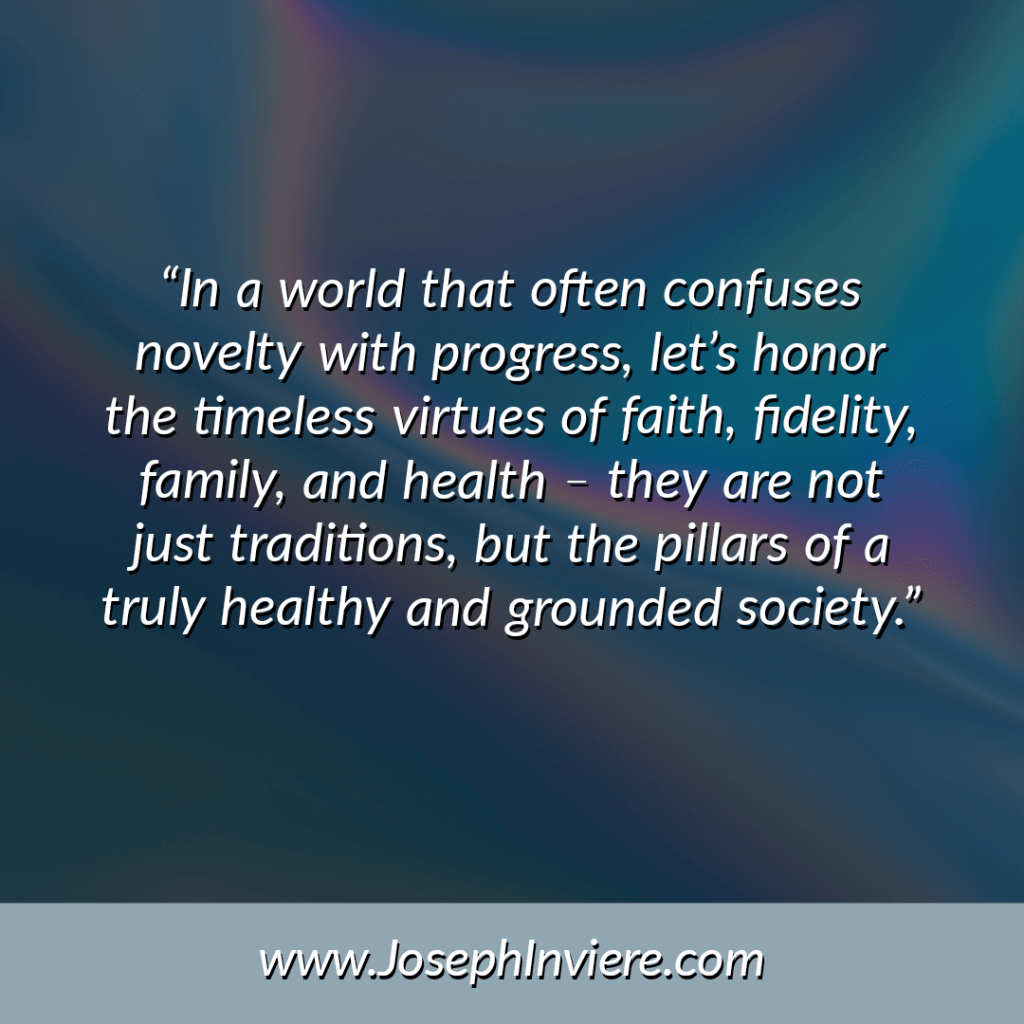

In recent times, there’s been a growing narrative that paints traditional practices like faith, monogamous relationships, raising children, and eating healthy as outdated or even extreme. These age-old practices, once seen as the norm, are now being labeled as an ‘alternative lifestyle.’ It’s a curious shift, one that demands a closer examination and a strong case for why we must not only preserve but also embrace these traditional values for the well-being of our society.
Faith, in its many forms, has been a bedrock of human civilization. It’s not merely a set of rituals or beliefs; it’s a community, a moral compass, and a source of comfort in times of need. Similarly, fidelity in relationships builds trust and stability, creating a nurturing environment for raising children. Speaking of children, they are not just the future of society; they are its very heart, bringing joy, purpose, and continuity. And let’s not forget the role of healthy eating in maintaining our physical and mental well-being.
Why, then, are these pillars of traditionalism seen as outdated? Perhaps it’s the result of a fast-paced, ever-changing world where novelty is often mistaken for progress. But it’s crucial to recognize that not all change leads to improvement. Traditional values have stood the test of time for a reason. They foster a sense of belonging, provide a framework for living, and contribute to a healthier, more stable society.
It’s time to challenge the narrative that equates traditionalism with backwardness. Embracing these values doesn’t mean rejecting progress; it means grounding our advances in a solid, time-tested foundation. It’s about balance, respecting the wisdom of the past while navigating the complexities of the modern world.
Let us not forget that the strength of a society lies in its roots. By reaffirming our commitment to traditional values like faith, fidelity, family, and health, we lay the groundwork for a society that’s not only thriving but also deeply connected to its core human principles.
 Joseph Inviere